Coronary artery disease (CAD) represents one of the most significant global health challenges, serving as the leading cause of death worldwide. In the complex ecosystem of modern healthcare, accurate classification and documentation are paramount—not only for patient care but for research, billing, and health statistics. This is where the ICD-10 coding system becomes essential. This guide provides a comprehensive overview of coronary artery disease ICD 10, explaining what the codes mean, why they matter, and how they are used in clinical practice.
What is ICD-10?
The International Classification of Diseases, Tenth Revision (ICD-10) is the global standard for diagnostic coding. Published by the World Health Organization (WHO), it provides alphanumeric codes to classify every disease, symptom, abnormal finding, and external cause of injury or illness. In the United States, the clinical modification—ICD-10-CM—is used for diagnostic coding.
These codes create a universal language that allows healthcare providers, insurers, and researchers to consistently track, analyze, and share health information. When it comes to coronary artery disease ICD 10 codes, they specify not just the presence of CAD, but often its type, severity, and associated complications.
The Clinical Scope of Coronary Artery Disease (CAD)
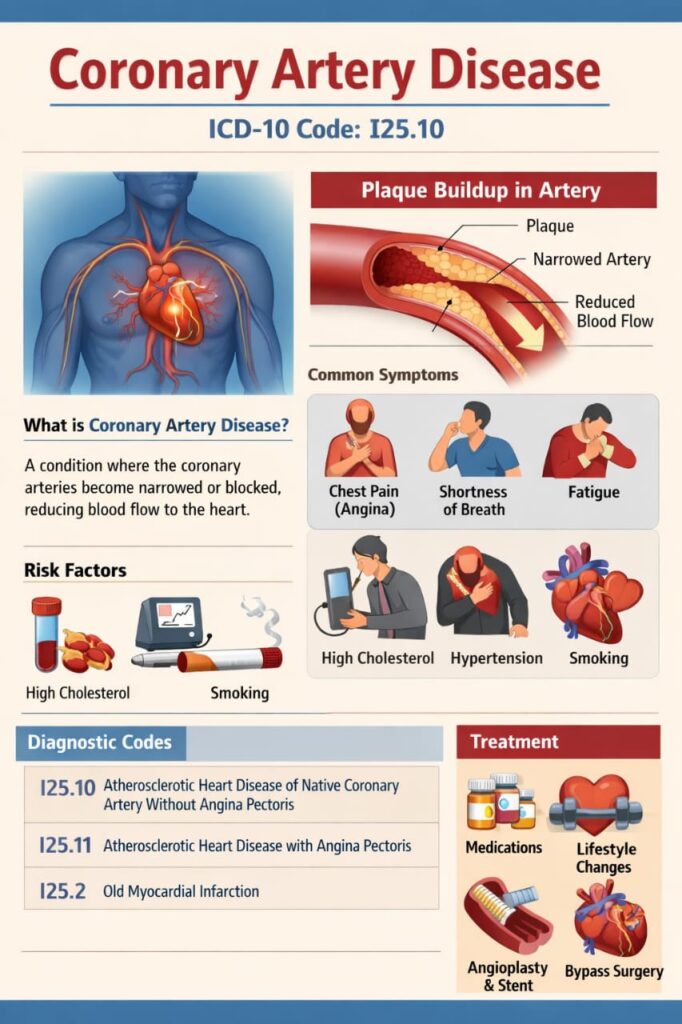
Before diving into the codes, it’s crucial to understand what is being classified. Coronary artery disease is characterized by the narrowing or blockage of the coronary arteries, usually due to atherosclerosis—the buildup of cholesterol-filled plaques. This restricts blood flow to the heart muscle, which can lead to:
Stable Angina: Predictable chest pain or discomfort with exertion.

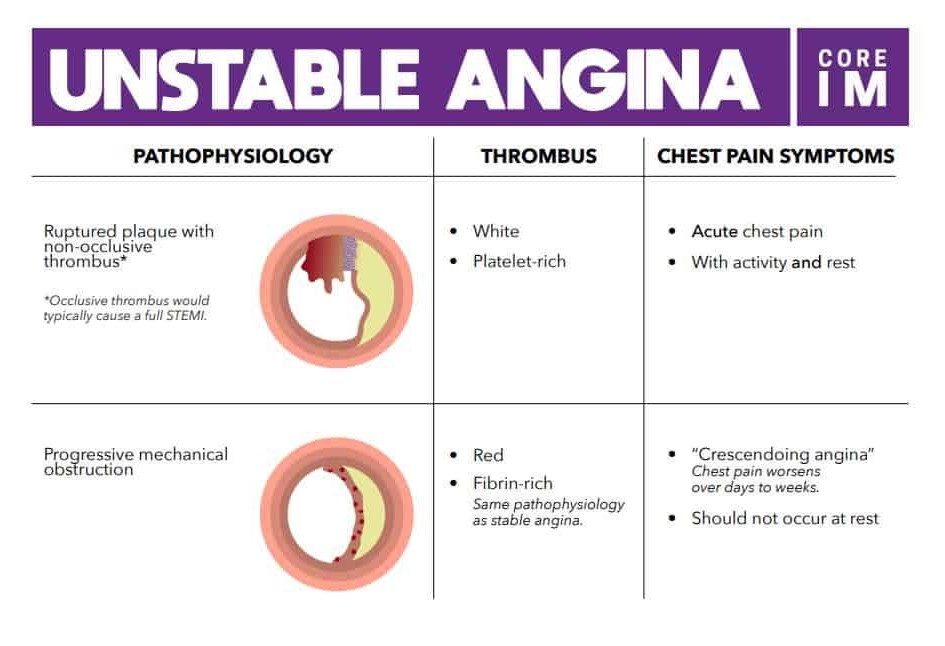
Unstable Angina: Unpredictable chest pain, often at rest, signaling a high risk for heart attack.
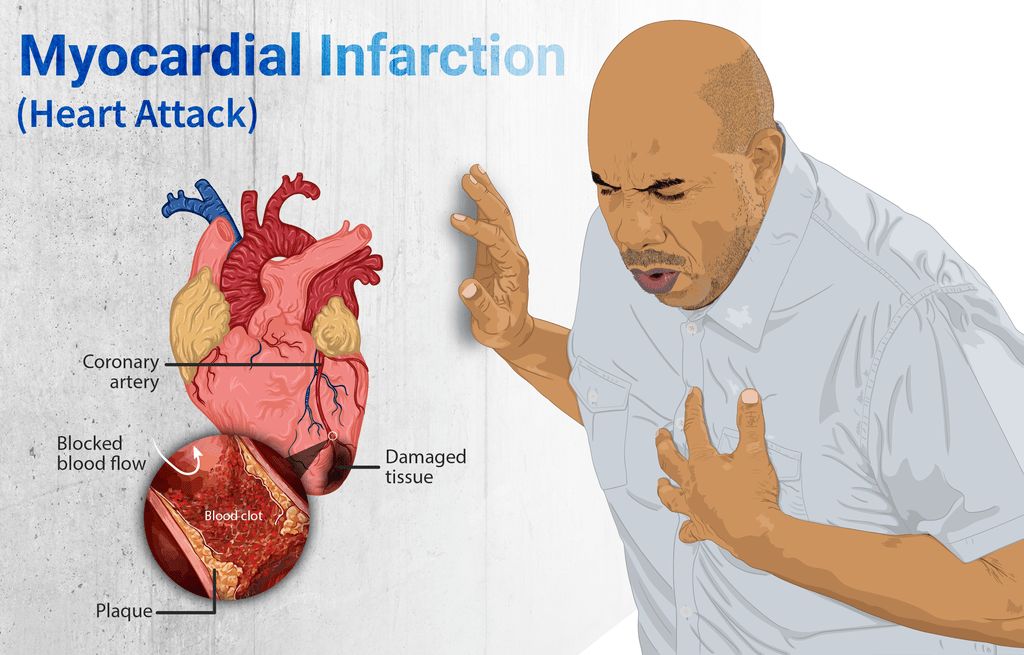
Myocardial Infarction (Heart Attack): Complete blockage of blood flow, causing heart muscle death.
- Arrhythmias: Irregular heart rhythms.
The coronary artery disease ICD 10 system has specific codes to capture each of these clinical states.
Key ICD-10 Codes for Coronary Artery Disease
The codes for CAD fall primarily under category I25, “Chronic ischemic heart disease.” Accurate coding requires attention to detail, as the fifth, sixth, and sometimes seventh characters provide critical specificity.
Here are the foundational coronary artery disease ICD 10 codes:
- I25.10 – Atherosclerotic heart disease of native coronary artery without angina pectoris
This is a common code for a confirmed diagnosis of CAD in a patient without current anginal symptoms. - I25.110 – Atherosclerotic heart disease of native coronary artery with unstable angina pectoris
Used for patients with CAD experiencing the acute, unpredictable chest pain of unstable angina. - I25.111 – Atherosclerotic heart disease of native coronary artery with angina pectoris with documented spasm
Specific for angina caused by coronary artery vasospasm (Prinzmetal’s angina). - I25.118 – Atherosclerotic heart disease of native coronary artery with other forms of angina pectoris
A code for stable angina or other specified anginal types. - I25.119 – Atherosclerotic heart disease of native coronary artery with unspecified angina pectoris
- I25.2 – Old myocardial infarction
Used for a history of a past heart attack, which is a form of chronic ischemic heart disease.
Crucial Specificity: The Importance of Additional Digits
The coronary artery disease ICD 10 structure demands precision regarding the vessel(s) involved and prior procedures:
- I25.83 – Coronary atherosclerosis due to lipid rich plaque
- I25.84 – Coronary atherosclerosis due to calcified coronary lesion
Furthermore, you must use additional codes to specify:
- The Number of Vessels Diseased: Codes from I25.81- I25.84 require a 5th digit to specify 1, 2, 3, or unspecified number of vessels.
- Presence of Atherosclerosis in Bypass Grafts or Transplanted Hearts: Separate code categories exist (I25.7-, I25.8-).
- Presence of Hypertension: If applicable, an I10 code is added, as hypertension is a major risk factor.
Why Accurate Coronary Artery Disease ICD 10 Coding is Critical
Using the correct coronary artery disease ICD 10 code is far more than an administrative task. It has direct, real-world implications:
- Patient Care and Treatment Tracking: Specific codes create a precise medical history. Knowing a patient is coded as I25.110 (unstable angina) versus I25.10 (without angina) triggers different clinical pathways, urgency of care, and treatment plans. It ensures continuity across providers.
- Medical Billing and Reimbursement: Insurance companies (payers) require specific ICD-10-CM codes to justify the medical necessity of procedures, tests, and hospital admissions. An incorrect or unspecified code can lead to claim denials or delays, directly impacting healthcare revenue.
- Epidemiology and Public Health Research: Aggregated coronary artery disease ICD 10 code data is used by organizations like the CDC and WHO to:
- Track the prevalence and incidence of CAD nationally and globally.
- Identify risk factors and health disparities among populations.
- Measure the effectiveness of public health interventions and treatment guidelines.
- Direct funding and resources for heart disease research and prevention programs.
- Hospital and Provider Quality Metrics: Codes are used in quality reporting programs to benchmark outcomes for CAD patients (e.g., readmission rates after heart attack, timeliness of intervention). Accurate coding ensures fair and accurate quality assessments.
Clinical Documentation is the Foundation
The accuracy of any coronary artery disease ICD 10 code hinges entirely on the quality of the clinician’s documentation in the patient’s medical record. Coders rely on this documentation to assign the most specific code possible. Key elements a physician must clearly document include:
- The specific type of CAD (atherosclerotic, vasospastic).
- The clinical presentation (stable angina, unstable angina, asymptomatic).
- The number and type of coronary vessels involved.
- Any history of myocardial infarction.
- The status of any prior interventions (stents, CABG).
- Associated conditions like hypertension or heart failure.
Conclusion: More Than Just a Code
Understanding coronary artery disease ICD 10 is understanding the critical link between clinical medicine and the data-driven systems that support it. These alphanumeric strings are the essential translators of a complex clinical condition into a standardized format that drives patient care decisions, ensures proper reimbursement, and fuels the research that will shape future treatments. For healthcare providers, coders, and administrators alike, proficiency with the coronary artery disease ICD 10 codes is a fundamental component of managing one of the world’s most prevalent and serious chronic diseases. It ensures that every diagnosis is accurately captured, communicated, and acted upon across the entire continuum of care.