
For beginners at home cardio workout , start with a 5-minute warm-up. Next, perform a circuit of bodyweight exercises, including jumping jacks, high knees, and mountain climbers. Do each exercise for 30 seconds, followed by a rest period of 15 to 30 seconds. Finish your workout with a 5-minute cool-down stretch. Additionally, you can try brisk walking in place or using low-impact variations of these exercises.
Beginner-Friendly at home Cardio Workout
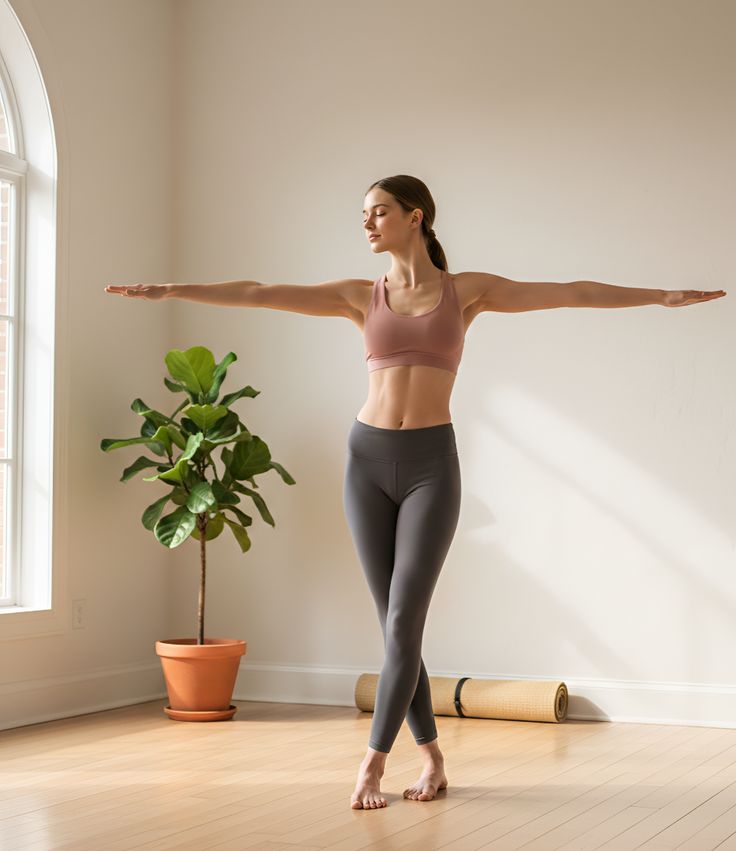
If you’re new to home cardio, begin with low-impact exercises. This can include walking in place, light jogging, or dancing. A simple 30-minute at home cardio workout can be an excellent starting point. Focus on learning the correct form and gradually increasing your endurance. Knee-friendly at home cardio workout is a fantastic option for those with joint concerns or injuries. Low-impact exercises like cycling on a stationary bike, swimming (if accessible), or using a rowing machine are gentle on the knees while still offering a great workout.
Mix in High-Intensity Interval Training (HIIT)
Once you’ve built endurance through LISS or low-impact cardio, you can start incorporating HIIT treadmill cardio workout for greater intensity. Short bursts of high-intensity exercise followed by brief rest periods can help burn fat and build strength. Examples of HIIT exercises you can do at home cardio workout include jumping jacks, burpees, or mountain climbers. Start with 20 seconds of intense work, followed by 40 seconds of rest. Work up to longer work intervals as your body adapts.
Mix Low-Impact and High-Impact Exercises
Combining knee-friendly cardio at home with more challenging moves ensures a balanced approach to fitness. For example, on some days focus on LISS cardio (like walking or cycling), and on other days add more intense movements like squats, lunges, or stair climbing for strength and conditioning.
30-Minute at home Cardio Workout
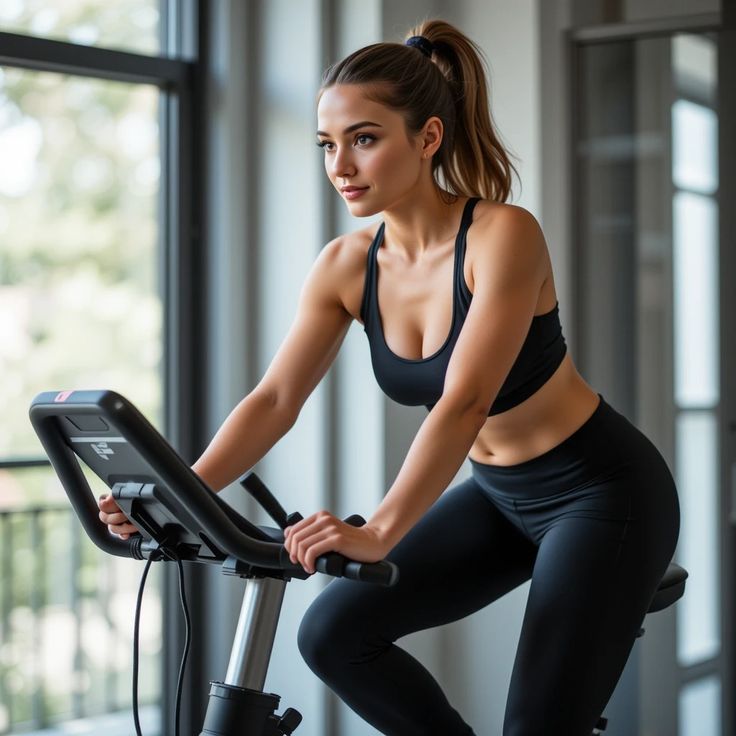
• Warm-up (5 minutes): Light walking or marching in place.
• Main Workout (20 minutes):
• 1 minute of jumping jacks
• 1 minute of walking or marching in place
• 1 minute of squats
• 1 minute of knee-friendly cycling or step-touch (if you need low-impact options)
• Repeat the cycle for three rounds.
• Cool-down (5 minutes): Gentle walking and stretching. By incorporating these tips, you can safely progress your home cardio routine, whether you’re doing LISS cardio, focusing on knee-friendly cardio, or pushing yourself with a 30-minute cardio workout.
Cardio Circuit at Home:
What is a Cardio Circuit? A cardio circuit is a sequence of 3 to 6 exercises performed back-to-back with minimal rest. This keeps your heart rate elevated, builds endurance, and can be adapted to any fitness level.
Move 1: High knees or marching high knees.
Sample at Home Cardio workout Circuit (All Levels): Warm-up: 3 to 5 minutes of light movement (marching in place, arm circles).
Move 2: Bodyweight squats (or half-squats if you are a beginner).
Move 3:Mountain climbers (or slow plank knee draws for lower impact).
Move 4:Jumping jacks (or side-step jacks for lower impact).
Move 5: Burpees (or step-back burpees/no jump for beginners).
Cool down with 5 minutes of walking in place, then stretch.
Why It Works for All Fitness Levels:
– You can adjust the intensity and impact.
– You can substitute easier versions while still completing the circuit.
– It builds cardiovascular fitness and endurance without the need for machines.
– You can increase the number of rounds or decrease rest time as you progress.
Top Machines for Home Cardio & Fat Loss:
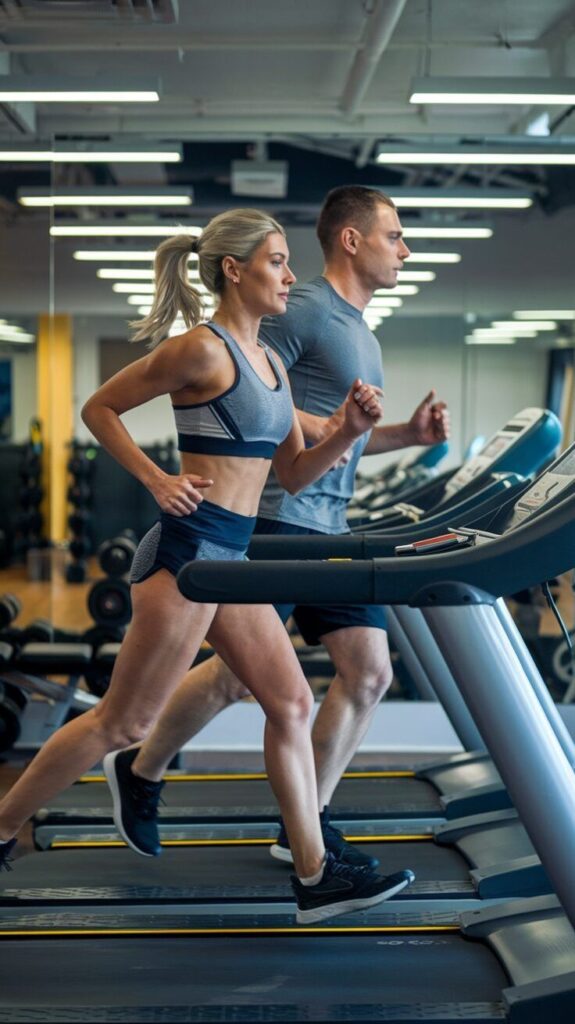
Great if you enjoy walking or running, but they can be harder on your joints. Stationary Bikes (Upright or Recumbent):** Low-impact and suitable for all fitness levels.
Rowing Machines: Provide a full-body workout, are effective for burning calories, and put less stress on joints.
Ellipticals: Low-impact and beneficial for fat loss and cardiovascular health.
Air Bikes/Fan Bikes: High-calorie-burning potential; can be adjusted from moderate to intense.
Best Cardio Machine for Fat Loss: According to expert reviews, rowing machines and full-body workout machines are very effective for fat loss because they engage multiple muscle groups and burn more calories.
Cardio Exercises for Bad Knees (Knee-Friendly Cardio):
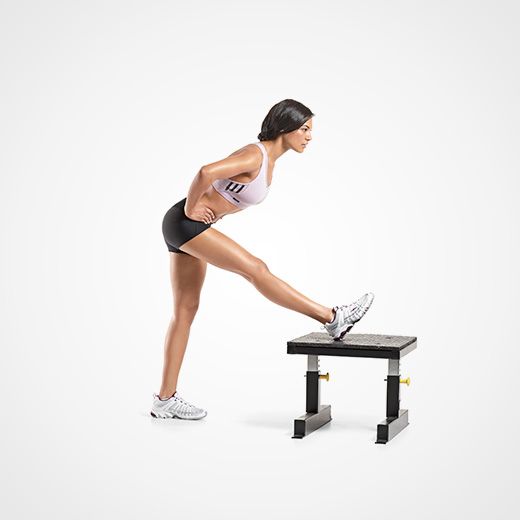
What to Look For:
Low-impact: Minimal jumping or pounding on the joints. Controlled movement with smooth joint alignment. Machines or exercises that support your body weight (like bikes or rowers) rather than placing all body weight on the legs.
Good Exercises for Bad Knees:
Stationary or Recumbent Bike: Supports your weight and provides a smooth pedaling motion.
Rowing Machine: Engages legs, back, and arms while seated, with low impact on the knees.
Elliptical Machine: Offers a gliding motion with minimal impact.
Swimming or Aqua Jogging (if accessible): Water supports body weight and reduces joint stress.
For bodyweight at home cardio workout: marching in place, side steps, modified jumping jacks (stepping instead of jumping).
Tip:
Constantly monitor knee pain — aim for a pain level of 2 out of 10 during exercise and no swelling afterward. Sample Knee-Friendly Session Using Equipment:
Warm-up: 5 minutes of easy pedaling on the stationary bike.
Main Workout: 20 minutes at a moderate pace (you should be able to talk but not sing). Increase time by 5 minutes each week or add slight resistance.
Cool-down: 3 to 5 minutes at a leisurely pace followed by light stretching of the quads and hamstrings.
Impact and Joint Stress: For instance, bikes, ellipticals, and rowers are gentler on the knees.
Versatility: Can it accommodate both beginners and advanced users (with adjustable resistance and programs)?
Use: The best machine is the one you will actually use.
FAQs
How long does it take to get rid of belly fat on a treadmill?
We can’t answer this question with a simple yes or no; it’s more complex than it seems. Running, the primary goal of all cardiovascular exercise, is to strengthen the heart and cardiovascular system. It also helps burn fat, but at a much slower pace, so it requires more effort to see results. This is because the body needs energy when it’s under stress or in recovery. Running doesn’t put a significant strain on muscles, except for the leg muscles and some thigh muscles. Therefore, you’ll only lose fat when running, which puts stress on the muscles. However, in specific exercises like abdominal exercises, initial fat loss occurs during the exercise itself. Also, when we stress our muscles, they develop tiny tears, and when they recover, the result is larger, stronger, and denser muscles. This recovery process gradually removes the surrounding fat, which the body uses for healing. But this doesn’t mean you should do abdominal exercises every day. Combining full-body strength training with cardiovascular exercise will certainly yield better results. And don’t forget to maintain a healthy diet; it plays a greater role in maintaining body fat percentage than exercise alone.
What are the harmful effects of using a treadmill?
This is very harmful to the knees, as they are subjected to a lot of pressure when jogging or running. It’s better to walk on a slope. Also, don’t forget that it’s a motorized machine; in fact, it helps you walk.
What is the purpose of a treadmill?
Step 1
Familiarize yourself with the treadmill you will be using. Make sure you know how to adjust the speed and incline. If you are using a treadmill at a gym, a staff member can assist you.
Step 2
Do some stretches before getting on the treadmill. Do 5 to 10 dynamic stretches to loosen your joints and muscles. Dynamic stretches are performed while walking. For example, you can walk with your knees raised as high as possible. Then, swing your legs forward and backward, slowly raising them as your muscles relax. To warm up your arms, you can swing them forward and backward or make slow, controlled circular movements with your arms.
Step 3
Get on the treadmill, but don’t stand directly on the track. Hold onto the handrails and place your feet on either side of the track. If the machine has a safety switch, attach it to your clothing and then press the power button. The tracks will begin to move slowly. Place your feet on the tracks one at a time, begin walking, and then release the handrails. Step 4
Begin your workout with a light, five-minute warm-up. The intensity of this warm-up depends on the type of exercise you plan to do. If you plan to walk briskly, walk slowly. If you plan to run continuously, walk briskly or jog gently. As the warm-up nears its end, gradually increase your speed to your preferred pace, and then resume your workout.
Step 5
Walk or run properly. Keep your back straight, shoulders back, and eyes forward. When you remove your hands from the handrails, release them. Move your hands smoothly with your feet.