AMYLOID HEART DISEASE

Amyloid heart disease (cardiac amyloidosis) is a condition where insoluble amyloid proteins deposit in the heart, leading to thickening and stiffening of the muscle. This category provides essential information on its two primary forms (AL and ATTR), common symptoms of heart failure, the specialized tests required for diagnosis, and the evolving landscape of treatments aimed at managing the protein disorder and supporting cardiac function.

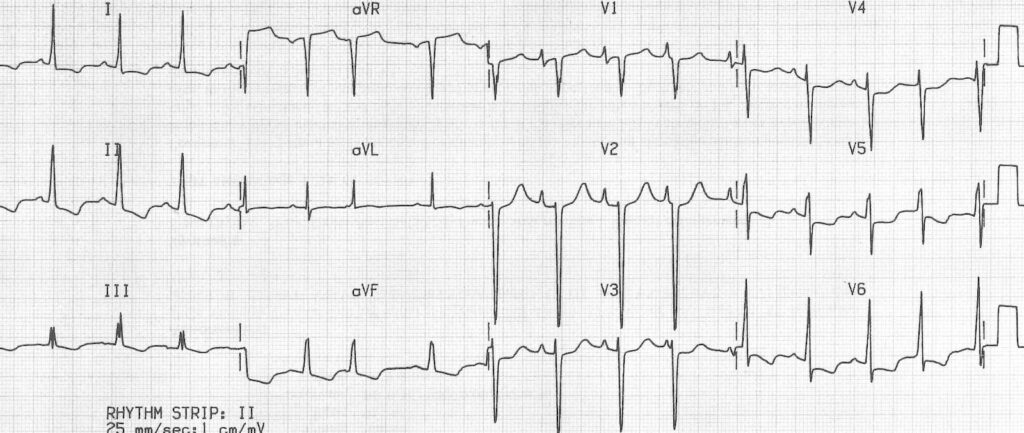
ecg biatrial enlargement

Bi-Atrial Enlargement: A Comprehensive Review

Bi-Atrial Enlargement (BAE), also known as bi atrial enlargement or dilation, is a cardiac condition characterized by the enlargement of both the left atrium (LA) and the right atrium (RA). It is not a primary disease but a pathophysiological consequence of chronically elevated pressure and/or volume overload within the cardiac chambers. Bi-Atrial Enlargement often signifies […]

Bi-Atrial Enlargement: A Comprehensive Review Read More »
Amyloid Heart Echo

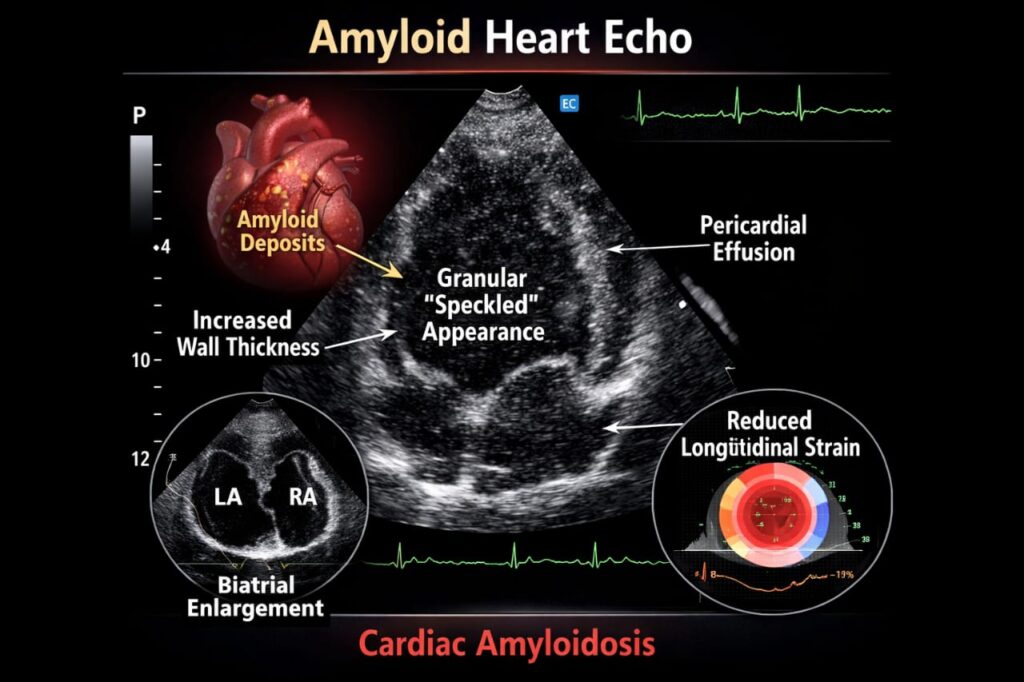
Understanding Amyloid Heart Echo Findings

An ewq (echocardiogram) is a crucial, non-invasive ultrasound test used to detect and monitor cardiac amyloidosis—a condition where abnormal proteins called amyloids build up in the heart muscle, making it stiff and impairing its function. Key echocardiographic findings suggestive of cardiac amyloidosis include: 1. Increased Wall Thickness: 2. Granular or “Sparkling” Myocardial Texture: 3. Diastolic Dysfunction (Restrictive

Understanding Amyloid Heart Echo Findings Read More »