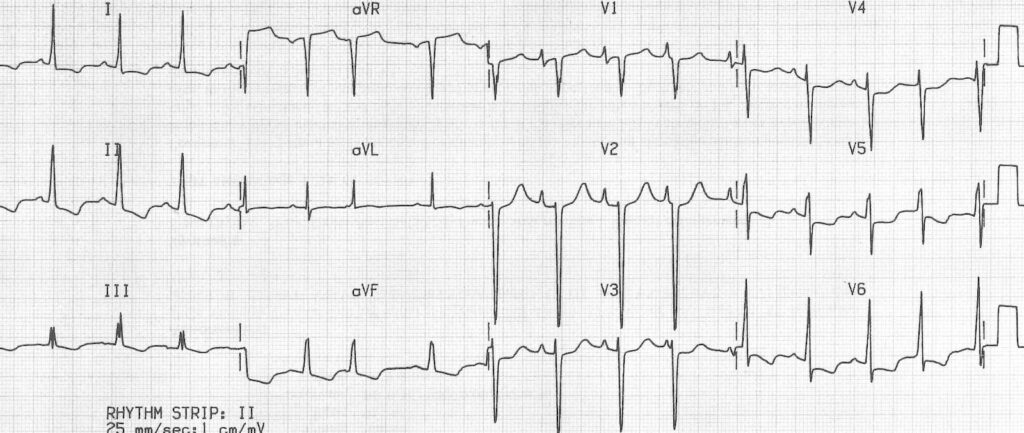
Bi-Atrial Enlargement (BAE), also known as bi atrial enlargement or dilation, is a cardiac condition characterized by the enlargement of both the left atrium (LA) and the right atrium (RA). It is not a primary disease but a pathophysiological consequence of chronically elevated pressure and/or volume overload within the cardiac chambers. Bi-Atrial Enlargement often signifies significant underlying cardiac pathology affecting multiple heart chambers and is a marker for increased cardiovascular morbidity and mortality.
2. Etiology (Causes)
Bi-Atrial Enlargement typically arises from conditions that strain both sides of the heart. Common etiologies include:
- Combined Left and Right Heart Pathology:
- Advanced Cardiomyopathies (Dilated, Restrictive, Hypertrophic): These globally affect heart muscle function, leading to elevated pressures in both atria.
- Severe Valvular Heart Disease: Combined lesions like mitral stenosis (elevates LA pressure) and tricuspid regurgitation (elevates RA pressure) are classic causes.
- Myocarditis or Advanced Ischemic Heart Disease.
- Conditions Causing Pulmonary Hypertension: Chronic pulmonary hypertension (e.g., from COPD, pulmonary fibrosis) increases right heart afterload, leading to right atrial enlargement. When severe, it can also cause left-sided diastolic dysfunction via ventricular interdependence, eventually leading to Bi-Atrial Enlargement.
- Systemic Conditions:
- Uncontrolled Systemic Hypertension leading to left ventricular hypertrophy and diastolic dysfunction.
- Infiltrative Diseases (e.g., Amyloidosis, Sarcoidosis) that stiffen both ventricles.
- Chronic Kidney Disease, causing fluid overload and hypertension.
3. Diagnostic Assessment
Diagnosis is multi-modal, relying on a combination of tools:
- Electrocardiogram (ECG): ECG criteria for Bi-Atrial Enlargement are a combination of signs for both LA and RA enlargement.
- LA Enlargement Signs: Broad, notched P wave in lead II (>120 ms duration) known as P mitrale.
- RA Enlargement Signs: Tall, peaked P wave in lead II (>2.5 mm amplitude) known as P pulmonale.
- The combined pattern can manifest as a large, biphasic P wave in lead V1 with a broad negative terminal component (LAE) and a tall initial positive component (RAE).
- Echocardiography (Gold Standard): Provides direct visualization and quantitative measurements.
- LA Size: Measured by LA volume index (LAVi >34 mL/m² is considered enlarged).
- RA Size: Measured by RA area (>18 cm²) or RA volume index.
- Echocardiography is crucial for identifying the underlying causes (valvular disease, systolic/diastolic dysfunction, pulmonary hypertension).
- Cardiac Magnetic Resonance (CMR): Offers the most accurate volumetric assessment and excellent tissue characterization, useful in complex cases like cardiomyopathies or infiltrative diseases.
4. Clinical Implications & Prognosis
Bi-Atrial Enlargement is a powerful prognostic indicator.
- Marker of Disease Severity: It reflects chronicity and severity of the underlying cardiac condition.
- Risk of Arrhythmias: Enlarged atria are substrates for atrial fibrillation and flutter, significantly increasing stroke risk.
- Heart Failure: BAE is strongly associated with both right and left heart failure and predicts worse outcomes in heart failure patients.
- Increased Mortality: The presence of Bi-Atrial Enlargement is independently associated with higher all-cause and cardiovascular mortality.
5. Management Principles
There is no direct treatment for Bi-Atrial Enlargement itself. Management is entirely focused on the underlying etiology:
- Treat the Cause: Aggressive management of hypertension, heart failure (with guideline-directed medical therapy), valvular intervention (repair/replacement), or treatment of pulmonary hypertension.
- Manage Sequelae: Rhythm control or anticoagulation for atrial fibrillation, diuretics for volume overload.
- Lifestyle Modifications & Comorbidity Management: Salt restriction, weight management, and control of diabetes and kidney disease.
- Monitoring: Regular cardiac imaging to assess progression and response to therapy.
6. Conclusion
Bi-Atrial Enlargement is a critical diagnostic finding that serves as a barometer of advanced, often biventricular, cardiac disease. Its detection on ECG or imaging should prompt a thorough investigation for the underlying etiology. While reversal of enlargement may be possible with early and aggressive treatment of the cause (e.g., valve surgery), its presence generally indicates a chronic state requiring comprehensive management to reduce the associated risks of arrhythmia, heart failure, and mortality. Understanding Bi-Atrial Enlargement is therefore essential for risk stratification and optimal patient care in cardiology.