
TNBC Skin Disease refers specifically to the spread or direct involvement of Triple-Negative Breast Cancer (TNBC) in the skin. Unlike primary skin cancers, TNBC Skin Disease represents a form of metastatic cancer, where aggressive breast cancer cells travel to and manifest within the skin’s layers and structures. These cutaneous metastases are a significant clinical concern, as they often signal advanced disease and present unique diagnostic and therapeutic challenges for patients and oncologists alike.
This overview explains the nature of TNBC Skin Disease, detailing how it presents, why it occurs, and the current approaches to its diagnosis and management.
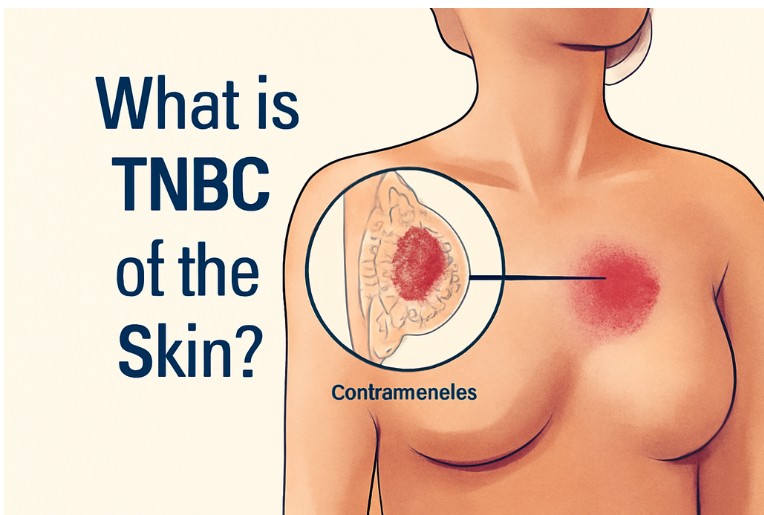
What is TNBC Skin Disease?
TNBC Skin Disease occurs when cancer cells from a primary triple-negative breast tumor—a subtype lacking estrogen receptors, progesterone receptors, and HER2 protein—break away and spread via lymphatic vessels or blood to the skin. This can happen in several ways:
- Local Recurrence: Cancer reappears in the skin, scar tissue, or chest wall near the original mastectomy or lumpectomy site. This is the most common form.
- Regional or Distant Metastases: Cancer spreads to the skin farther from the original site, such as on the back, scalp, or abdomen, indicating systemic spread.
These skin manifestations are not a separate disease but are a visible sign of metastatic TNBC activity.

Signs and Symptoms of TNBC Skin Disease
Cutaneous metastases from TNBC can present in various ways, often mistaken for benign skin conditions. Key signs include:
- Skin Nodules or Masses: The most common presentation. Firm, painless (or sometimes tender), flesh-colored, pink, or reddish-purple lumps under the skin. They may be single or multiple and can grow rapidly.
- Cancerous “Plaques”: Areas of thickened, hardened skin that may resemble an orange peel (peau d’orange), often associated with inflammation (carcinoma erysipeloides).
- Ulcerated Lesions: Nodules or plaques that break open, forming sores that do not heal and may weep or bleed.
- Inflammatory Changes: Red, warm, and tender patches of skin that can mimic an infection like cellulitis.
- Scar-Like Changes: Hardened, fibrotic skin that resembles a scar but appears without a history of injury.
These changes most frequently appear on the chest wall, around surgical scars, but can occur anywhere.
Why TNBC is Prone to Skin Metastases
The aggressive biology of TNBC contributes to its propensity for metastasis, including to the skin.
- Lack of Targeted Receptors: Because TNBC lacks the three common receptors, it does not respond to hormonal therapies or HER2-targeted drugs, potentially allowing it to progress more readily.
- Aggressive Local Growth: TNBC often has a high proliferative rate, which can favor local invasion into nearby skin and tissue.
- Lymphatic Spread: Breast cancer commonly spreads via the lymphatic system, which is richly integrated with the skin.
Diagnosis of TNBC Skin Disease
Accurate diagnosis is crucial, as skin lesions can be the first sign of recurrence. The process involves:
- Clinical Examination: An oncologist or dermatologist examines the skin changes, noting their appearance and location.
- Skin Biopsy: The definitive diagnostic tool. A small sample of the lesion is removed and examined by a pathologist. Special immunohistochemistry (IHC) staining is critical to confirm the cells are of breast origin and are triple-negative (ER-, PR-, HER2-), matching the original cancer.
- Imaging: A CT scan, PET scan, or ultrasound may be used to assess the extent of metastasis and identify other potential sites of disease.
Treatment and Management Strategies
Treating TNBC Skin Disease focuses on systemic (whole-body) control of the metastatic cancer, with local therapies for symptom relief.
- Systemic Therapies:
- Chemotherapy: Remains a cornerstone for metastatic TNBC.
- Immunotherapy: Checkpoint inhibitors (e.g., Pembrolizumab) combined with chemotherapy are now a standard option for eligible patients, helping the immune system attack cancer cells.
- PARP Inhibitors: For patients with BRCA gene mutations, drugs like olaparib target specific DNA repair pathways in cancer cells.
- Antibody-Drug Conjugates (ADCs): Sacituzumab govitecan is a targeted therapy that delivers chemotherapy directly to cancer cells.
- Local Therapies (for symptom control):
- Radiation Therapy: Highly effective for relieving pain, bleeding, or ulceration from specific skin lesions.
- Topical Treatments: Chemotherapy creams or immune-response modifiers for superficial lesions.
- Surgical Excision: Sometimes used for isolated, bothersome nodules.
Conclusion: A Visible Signal for Vigilant Care
TNBC Skin Disease is a serious manifestation of metastatic triple-negative breast cancer that requires prompt recognition and integrated care. Any new, persistent, or changing skin lesion in a patient with a history of TNBC should be evaluated immediately. While a diagnosis of cutaneous metastasis signifies advanced disease, the evolving landscape of systemic therapies for TNBC—including immunotherapy and targeted agents—offers meaningful options for disease control. Through vigilant monitoring, timely biopsy, and a personalized treatment plan, patients and their care teams can address TNBC Skin Disease as part of a comprehensive strategy to manage metastatic breast cancer and maintain quality of life.