
Accurate coding for Smoking Cessation CPT services is essential for healthcare providers to receive proper reimbursement while delivering evidence-based interventions to help patients quit tobacco use. The Centers for Medicare & Medicaid Services (CMS) and other payers recognize tobacco use counseling as a critical preventive service, making understanding Smoking Cessation CPT codes a fundamental aspect of clinical practice and revenue cycle management.
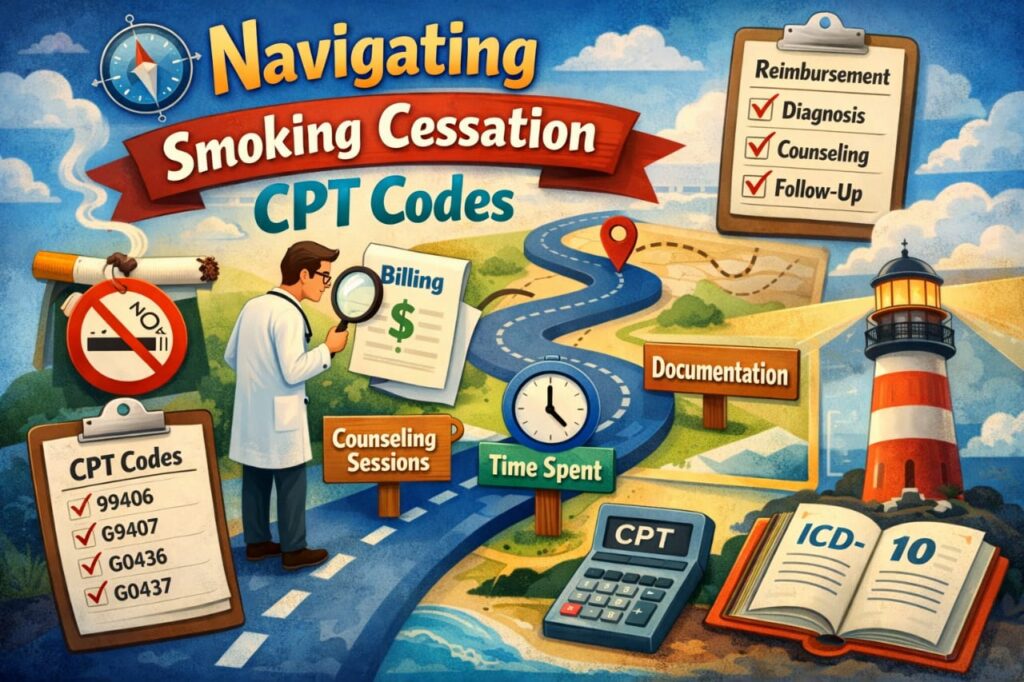
This comprehensive guide explores the specific Smoking Cessation CPT codes, their application criteria, documentation requirements, and billing nuances to ensure compliant and effective coding practices.
Primary CPT Codes for Smoking Cessation
99406: Intermediate Counseling Session
- Description: Smoking and tobacco use cessation counseling visit; intermediate, lasting 3 to 10 minutes
- Time Requirement: 3-10 minutes of face-to-face counseling
- Key Application: Used for brief intervention sessions focused on motivational interviewing, quit plan development, or follow-up support
- Documentation Must Include:
- Duration of counseling (must meet time threshold)
- Specific cessation strategies discussed
- Patient’s readiness to quit assessment
- Medications prescribed or recommended
99407: Intensive Counseling Session
- Description: Smoking and tobacco use cessation counseling visit; intensive, lasting greater than 10 minutes
- Time Requirement: >10 minutes of face-to-face counseling
- Key Application: Comprehensive cessation counseling including behavioral strategies, medication management, and relapse prevention planning
- Documentation Must Include:
- Exact start and end times of counseling
- Detailed discussion of cessation methods
- Barriers to quitting addressed
- Follow-up plan established
- Medication management if applicable
Critical Coding Guidelines and Requirements
Eligible Patients
- Medicare: Covers Smoking Cessation CPT services for patients who:
- Use any form of tobacco (cigarettes, cigars, vaping, smokeless tobacco)
- Are asymptomatic or have tobacco-related disease
- Receive counseling from qualified physicians or recognized practitioners
- Private Payers: Most follow Medicare guidelines, but check individual policies
- Frequency Limits:
- 8 sessions per 12-month period under Medicare
- Two cessation attempts per year (each attempt includes up to 4 sessions)
Appropriate Settings
- Office/Outpatient Visits
- Hospital Inpatient and Observation Care
- Nursing Facilities
- Annual Wellness Visits (can be billed separately during same encounter)
Documentation Essentials for Smoking Cessation CPT
Required Elements in Medical Record:
- Tobacco Use Status Confirmation: Document current use and type of tobacco
- Counseling Duration: Exact time spent on cessation counseling (must be separately identifiable)
- Content of Counseling: Specific interventions discussed:
- Behavioral strategies
- Medication options
- Quit plan development
- Relapse prevention
- Referral to quitline (1-800-QUIT-NOW)
- Medication Management: If pharmacotherapy prescribed, document:
- Medication name, dose, instructions
- Risks/benefits discussed
- Follow-up plan
- Separate Identifiable Service: Counseling must be distinct from other E/M services provided during same visit
Sample Documentation Language:
“Spent 12 minutes face-to-face providing intensive smoking cessation counseling. Discussed nicotine replacement therapy options, created personalized quit plan targeting stress triggers, reviewed coping strategies for cravings, and prescribed varenicline with detailed instructions. Patient demonstrated good understanding and set quit date for next week. Counseled on FDA-approved cessation medications and referred to state quitline.”
Billing and Reimbursement Strategies
Modifier Usage:
- Modifier 25: Use when Smoking Cessation CPT services are provided during same visit as separate, significant E/M service
- Documentation Must Justify: Both the E/M service and the counseling were separately necessary and identifiable
Correct Coding with E/M Services:
- Standalone Counseling: Bill only 99406 or 99407 if visit exclusively for cessation
- With Problem-Oriented Visit: Bill appropriate E/M code (99202-99215, etc.) plus 99406/99407 with modifier 25
- Preventive Visit: Bill preventive medicine code (99381-99397) plus 99406/99407 (no modifier needed as CMS considers preventive)
Medicare Coverage Specifics:
- Part B Coverage: Both 99406 and 99407 are covered
- No Coinsurance or Deductible: For eligible beneficiaries
- Frequency Tracking: Maintain records of counseling sessions to ensure compliance with 8-session annual limit
Common Coding Errors and Audit Risks
High-Risk Areas:
- Time Documentation: Failure to document exact counseling duration
- Medical Necessity: Inadequate documentation of tobacco use and counseling need
- Separate Service: Not documenting counseling as distinct from other services
- Frequency Violations: Exceeding allowed sessions without proper documentation of medical necessity
- Modifier Misuse: Incorrect use of modifier 25 when counseling was integral to E/M service
Best Practices to Avoid Denials:
- Time-Based Documentation: Use start/stop times or total minutes
- Specific Content: Detail exact counseling provided
- Annual Tracking: Implement system to track patient’s cessation sessions
- Coding Compliance: Regular staff education on Smoking Cessation CPT requirements
Integration with Value-Based Programs
Quality Measure Alignment:
- Meaningful Use/MIPS: Tobacco use screening and cessation intervention measures
- HEDIS Measures: Tobacco Cessation Intervention and Cardiovascular Monitoring
- ACA Requirements: Covered preventive service without cost-sharing
Population Health Impact:
Proper use of Smoking Cessation CPT codes supports:
- Improved patient outcomes and reduced tobacco-related morbidity
- Enhanced quality scores in value-based payment models
- Comprehensive preventive care delivery
- Documentation for pay-for-performance incentives
Resources and Tools for Providers
Clinical Support:
- CDC Clinical Practice Guidelines: Comprehensive treatment protocols
- SAMHSA Resources: Integration with substance use treatment
- State Quitlines: 1-800-QUIT-NOW referral documentation
Coding Support:
- AMA CPT Codebook: Annual updates and official guidelines
- CMS Preventive Services Tool: Coverage determination
- Professional Associations: AAFP, ACP, AHA coding resources
Patient Materials:
- FDA Cessation Medications Guide
- NIH SmokeFree.gov Tools
- Printable Quit Plans and Trackers
Future Trends in Smoking Cessation Coding
Emerging Developments:
- Telehealth Expansion: Increased coverage for virtual cessation counseling
- Digital Therapeutics: Potential codes for FDA-approved digital cessation programs
- Comprehensive Substance Use Codes: Integration with broader behavioral health coding
- Outcome-Based Payments: Potential linkage of reimbursement to successful cessation
Technology Integration:
- EHR Clinical Decision Support: Prompt documentation of cessation counseling
- Automated Coding Assistance: AI-based documentation optimization
- Patient Portal Tools: Self-management integration with clinical coding
Conclusion: Maximizing Impact Through Accurate Coding
Effective use of Smoking Cessation CPT codes serves dual purposes: ensuring appropriate reimbursement for valuable clinical services and supporting documentation of quality preventive care. By mastering codes 99406 and 99407, maintaining meticulous documentation, and staying current with payer requirements, healthcare providers can build sustainable smoking cessation programs that improve patient outcomes while maintaining coding compliance.
The key to success with Smoking Cessation CPT coding lies in the integration of clinical excellence with administrative precision—transforming brief interventions into billable services that support both patient health and practice viability in today’s value-based healthcare environment.